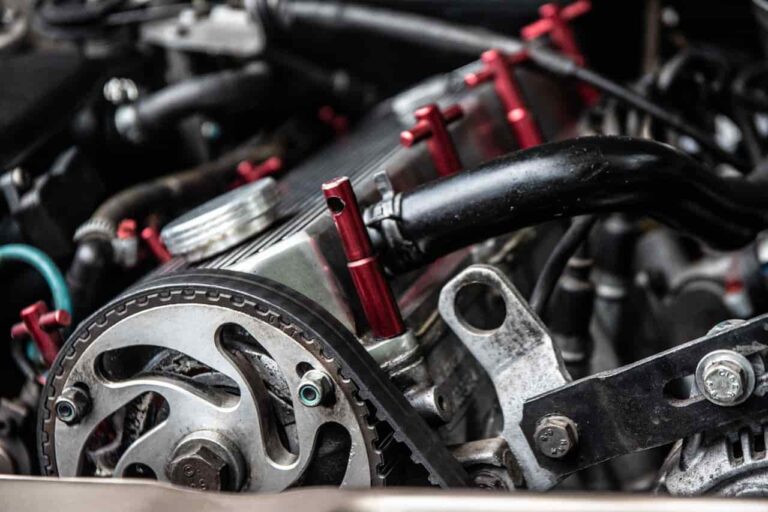
The timing system is one of the most critical components of an internal combustion engine. It ensures that the crankshaft and camshaft rotate in perfect synchronization, allowing the engine’s valves to open and close at the correct time. Without proper timing, your engine cannot operate efficiently and may even suffer severe internal damage.
If you’re researching vehicle maintenance or shopping for a car, you’ve probably come across the terms timing belt and timing chain. While both perform the same essential function, they differ significantly in construction, durability, maintenance requirements, and replacement costs.
In this guide, we’ll compare timing belt vs timing chain, explain their pros and cons, discuss maintenance intervals, and help you determine which system is better for your vehicle.
What Is a Timing Belt?
A timing belt is a reinforced rubber belt with molded teeth that connect the crankshaft to the camshaft. As the engine runs, the belt keeps these components synchronized so that the engine’s valves and pistons move in perfect harmony.
Timing belts are commonly found in many gasoline-powered vehicles because they are lightweight, quiet, and relatively inexpensive to manufacture.
Advantages of a Timing Belt
Timing belts offer several benefits, including:
- Quiet engine operation
- Lightweight design
- Lower manufacturing costs
- Smooth performance
- Less engine friction
Because they are made of rubber rather than metal, timing belts produce very little operating noise.
Disadvantages of a Timing Belt
Despite their advantages, timing belts have a limited lifespan.
Common drawbacks include:
- Require scheduled replacement
- Can break unexpectedly if neglected
- Sensitive to oil contamination
- Less durable than timing chains
Ignoring the recommended replacement interval can result in expensive engine damage, especially in interference engines.
What Is a Timing Chain?
A timing chain performs the same job as a timing belt but is constructed from hardened steel links similar to a bicycle chain.
Instead of operating outside the engine, the timing chain runs inside the engine and is continuously lubricated by engine oil.
Many modern vehicles use timing chains because of their durability and long service life.
Advantages of a Timing Chain
Timing chains provide several important benefits:
- Longer lifespan
- Greater durability
- Better suited for high-performance engines
- Less frequent replacement
- Resistant to heat and aging
Many timing chains can last well beyond 150,000 miles with proper maintenance.
Also Read: White Smoke From Exhaust
Disadvantages of a Timing Chain
Timing chains also have some disadvantages.
These include:
- Higher replacement cost
- More complex repair
- Heavier than timing belts
- Slightly noisier operation
Because replacing a timing chain often requires partial engine disassembly, labor costs are typically much higher.
Timing Belt vs Timing Chain: Key Differences
The table below compares the two systems.
| Feature | Timing Belt | Timing Chain |
| Material | Reinforced rubber | Hardened steel |
| Location | Outside engine | Inside engine |
| Lubrication | No | Yes (engine oil) |
| Lifespan | 60,000–100,000 miles | 150,000–250,000+ miles |
| Noise | Very quiet | Slightly louder |
| Replacement Cost | Lower | Higher |
| Maintenance | Scheduled replacement | Usually maintenance-free |
| Durability | Moderate | Excellent |
Although both systems accomplish the same task, their ownership costs and maintenance schedules are quite different.
How Long Does a Timing Belt Last?
Most manufacturers recommend replacing a timing belt every 60,000 to 100,000 miles, although some modern belts can last longer.
The exact interval depends on:
- Vehicle make and model
- Engine design
- Driving conditions
- Manufacturer recommendations
Replacing the timing belt before it fails is essential, as a broken belt can stop the engine instantly.
How Long Does a Timing Chain Last?
Timing chains generally last much longer than belts.
Many remain functional for:
- 150,000 miles
- 200,000 miles
- Even the life of the engine with proper maintenance
However, timing chains can still wear out due to poor maintenance, inadequate lubrication, or high mileage.
Regular oil changes are the key to maximizing timing chain life.
Symptoms of a Worn Timing Belt
A failing timing belt may produce several warning signs, including:
- Engine misfires
- Difficulty starting
- Rough idle
- Ticking noises from the engine
- Loss of power
- Visible cracks or wear during inspection
In many cases, however, a timing belt can fail without obvious warning, making preventive replacement especially important.
Symptoms of a Worn Timing Chain
Timing chains usually provide more warning before failure.
Common symptoms include:
- Rattling noise during startup
- Check engine light
- Engine timing codes
- Poor engine performance
- Metal shavings in engine oil
- Rough idle
A stretched timing chain may also affect ignition timing and fuel efficiency.
Replacement Costs
Replacement costs vary depending on the vehicle and labor rates.
Average 2026 estimates include:
Timing Belt Replacement
- Economy cars: $400–$800
- Mid-size vehicles: $600–$1,200
- Luxury vehicles: $1,000–$2,000+
Many mechanics recommend replacing the water pump, tensioner, and idler pulleys at the same time because they are often accessible during the same repair.
Timing Chain Replacement
Timing chain replacement is more expensive because it requires extensive engine disassembly.
Average costs include:
- Economy vehicles: $1,000–$2,000
- SUVs and trucks: $1,500–$3,000
- Luxury vehicles: $2,500–$4,500+
Although the repair is costly, it is generally needed far less often than timing belt replacement.
Which Is Better?
Neither system is universally better. The right choice depends on your priorities.
A timing belt may be preferable if you value:
- Lower replacement costs
- Quieter engine operation
- Simpler engine design
A timing chain is often the better option if you prioritize:
- Long-term durability
- Less frequent maintenance
- Higher reliability over the vehicle’s lifespan
For drivers who keep their vehicles for many years, a timing chain can reduce long-term maintenance requirements, provided the engine receives regular oil changes.
Maintenance Tips
Whether your engine uses a timing belt or timing chain, proper maintenance is essential.
Follow these best practices:
- Follow the manufacturer’s recommended service schedule.
- Replace the timing belt before the specified mileage interval.
- Change engine oil regularly to protect timing chains.
- Use the correct oil grade recommended by the manufacturer.
- Investigate unusual engine noises promptly.
- Repair oil leaks that could damage a timing belt.
- Replace related components, such as tensioners and water pumps, during major timing system service when recommended.
Routine maintenance can significantly reduce the risk of unexpected engine problems.
Conclusion
When comparing timing belt vs timing chain, both systems perform the same critical function of keeping the engine’s camshaft and crankshaft synchronized. However, they differ in materials, maintenance needs, durability, and replacement costs. Timing belts are quieter and less expensive to replace but require scheduled maintenance, while timing chains are more durable and can often last the life of the engine with proper care.
Understanding which system your vehicle uses helps you plan maintenance, avoid costly engine damage, and keep your car running reliably. Whether you have a timing belt or a timing chain, following the manufacturer’s service recommendations is the best way to ensure long-lasting engine performance.
